SEO,Automation

Why Ecommerce Owners Need to Rethink Their SEO Project Manager
A lot of stores hire SEO the same way they hire a contractor to renovate a kitchen.
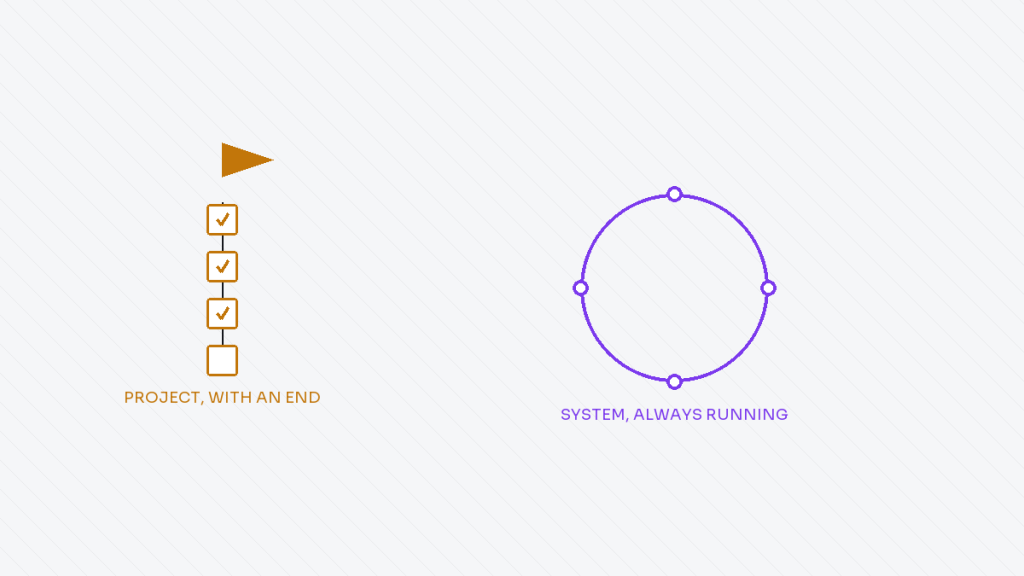
There is a project. There is a project manager. There is an end date.
SEO does not actually work that way, and treating it like a one time project is quietly costing stores real traffic. Here is the full case for rethinking how your store manages SEO.
Key takeaways
- SEO is an ongoing system, not a project with a finish line.
- A project manager coordinates tasks. SEO needs someone who owns outcomes.
- Handoffs between too many people slow everything down.
- The right setup connects SEO to content, automation, and reporting in one place.
The project manager mindset
A project manager is great at one thing: getting a defined list of tasks done on time.
That works well for a website redesign, a migration, or a one time technical audit.
It works badly for SEO, because SEO never actually finishes. Rankings move. Competitors publish new pages. Search engines update how they read content, sometimes several times a year.
Where this model came from
A lot of agencies still sell SEO in packages: a three month audit, a six month content sprint, a one time technical fix.
That structure is easy to sell and easy to scope. It is also mismatched with how search actually behaves.
Search is not a renovation you finish once. It is closer to a garden that needs regular attention, or it drifts back to where it started.
Why this setup slows stores down
In a lot of ecommerce teams, SEO tasks get split across too many people.
One person writes content. Another handles technical fixes. A project manager sits in the middle, translating between them, tracking status, and reporting up.
Every handoff adds delay. A small fix that should take a day can take three weeks once it passes through four people and two status meetings.
Signs this is happening in your store
Reports get sent, but nobody changes anything based on them.
The same recommendations show up in every quarterly review, unresolved.
Nobody can clearly say who is responsible when rankings drop.
Simple fixes take weeks to go live, even when everyone agrees they are needed.
SEO does not fail because nobody worked on it. It fails because nobody owned the whole system.
What ownership actually looks like
The stores that keep growing usually have one thing in common.
One person, or one small team, owns the full picture: content, technical SEO, and how it connects to the rest of marketing.
They are not just checking tasks off a list. They are watching what is working, adjusting quickly, and connecting SEO to the systems that turn traffic into sales.
Project manager versus systems owner
A project manager asks: is this task done by the deadline.
A systems owner asks: is this actually working, and what should we do differently this week.
A project manager reports status. A systems owner changes behavior based on results, without waiting for a formal review cycle.
Where automation fits in
This is where SEO and automation start to overlap.
The same person who understands your rankings can often set up the reporting, the alerts, and the dashboard that shows whether the work is actually paying off.
Instead of a project manager relaying updates in a meeting, you get one clear, live view of what is happening and why, the same kind of setup covered in building a dashboard your team will actually open.
A simple example
Say a product page’s ranking drops sharply.
In a project based setup, someone might notice it in a monthly report, three or four weeks later.
In a systems based setup, an automated alert flags the drop within days, and the person who owns SEO can investigate and fix it immediately, without waiting for a scheduled check in.
What to look for when hiring or restructuring
Questions worth asking your current setup
- Who actually owns SEO results, not just SEO tasks.
- How many people does a small fix pass through before it goes live.
- Is SEO connected to your reporting, or living in a separate report nobody reads.
- Would this still work if the project officially ended tomorrow.
- Does anyone get notified automatically when something breaks or drops.
Green flags
One clear owner who can explain what changed last month and why.
Fixes that go live in days, not weeks.
Reporting that leads to actual changes, not just a monthly slide deck.
Red flags
Nobody can answer who is responsible for a ranking drop.
The same audit findings repeat every quarter without being fixed.
SEO is treated as a line item that gets renewed or cancelled, never actually managed day to day.
How to transition from project based to systems based
Start by naming one clear owner, even if the team stays the same size.
Move from monthly reports to a live dashboard that anyone can check at any time.
Set up basic automated alerts for ranking drops, traffic drops, or broken pages, so problems get caught in days, not months.
Shift conversations from “is the task done” to “is this actually working,” and keep asking that question regularly.
Frequently asked questions
Does this mean SEO agencies are always the wrong choice
No. Some agencies do work in an ongoing, ownership focused way. The problem is specifically the fixed project mindset, not the word agency.
Is a systems based approach more expensive
Not necessarily. It often costs less over time, since fewer hours get lost to handoffs, status meetings, and repeated audits of the same problems.
Can a small store realistically do this
Yes. A small store often has an easier time, since there are fewer people and layers to coordinate between in the first place.
What is the very first step to take
Name one person as the clear owner of SEO outcomes, not just SEO tasks, and give them room to act without a lengthy approval chain.
The short version
A project manager finishes projects. Your store needs someone who keeps improving a system that never really finishes.
That one shift in mindset is often worth more than any single SEO task on the list.
Dhanik
I build the automation and marketing systems that let ecommerce brands grow without adding more manual work: email and SMS flows, workflow automation, reporting, and the content and SEO that feeds all of it. Currently building these systems at TechDeliveryPartners, after four years running SEO and content at KonixWeb, and seven years total in search and digital marketing.
View full profile