SEO

An Ecommerce Content System That Keeps Ranking Without Constant Updates
Publishing more content is not a strategy.
It is a habit that feels productive right up until the rankings plateau and nobody can explain which pages are actually working.
Most content calendars are built around a publishing frequency, three posts a week, one a day, without ever asking whether last month’s posts did anything at all. Here is a full breakdown of a better system, built around fewer pages that actually hold their rank.
Key takeaways
- A smaller set of well maintained pages usually outranks a large volume of thin ones.
- Pages built around a lasting question age better than pages built around a moment.
- A quarterly review schedule catches slippage before it shows up in traffic.
- RankMath flags are signals about real structure, not a checklist to satisfy.
- Old blog posts often make better raw material than starting from a blank page.
Why constant publishing stops paying off
New pages compete with your own older pages for the same keywords.
Search engines take time to trust a fast growing site, and a content calendar built around volume leaves no time to fix what is already ranking. Most sites do not have a publishing problem. They have a maintenance problem, and it hides behind the appearance of activity.
There is also a quieter cost. Every new page needs internal links pointing to it, a place in the site structure, and someone keeping an eye on whether it is actually being found. A hundred thin pages spread that attention so thin that none of them get the support they need to rank.
A system built around a smaller set of pages
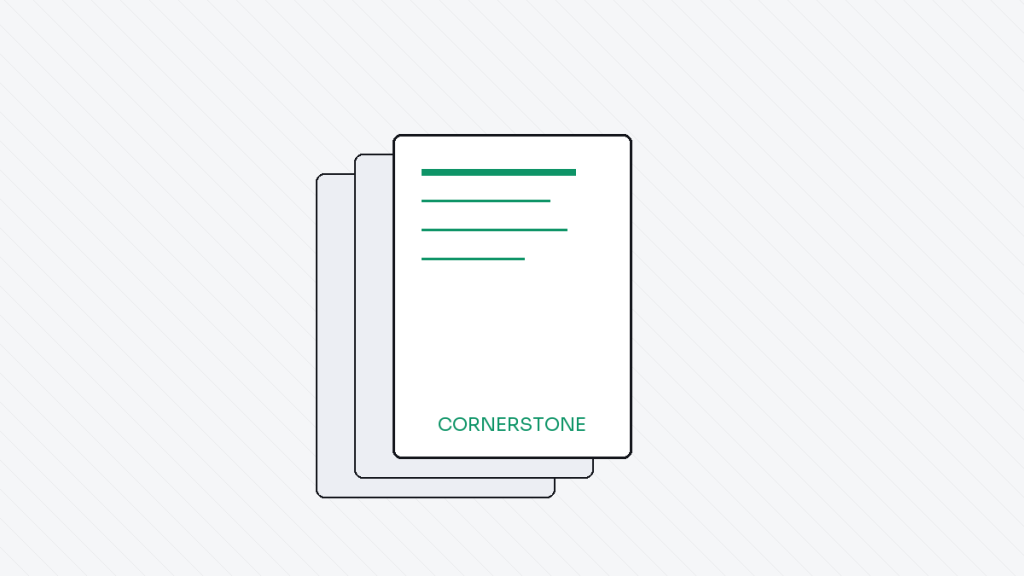
Instead of a constant stream of new posts, this system centers on a short list of pages built to hold their rank for a long time.
The list is usually shorter than people expect, often between ten and thirty pages for a small to mid sized ecommerce brand, covering the core questions and comparisons that customers actually search for.
Pick pages that answer a real, recurring question
Search intent that does not change month to month makes a page worth the investment.
If the question people ask has a short shelf life, a seasonal promotion or a one time announcement, it belongs in a quick update or a note, not a cornerstone page. The test is simple: will someone still be typing this exact question into search a year from now.
Structure for RankMath from the start
Clear heading hierarchy, one focus keyword per page, schema markup filled in completely, and internal links pointing to and from related pages.
Most of what RankMath flags as missing is exactly what search engines use to understand a page: a clear title, a logical structure, and signals about what the page actually covers. Treat every flag as a real gap to close, not a checklist to satisfy.
Review on a schedule, not when traffic drops
A quarterly pass through the top pages, checking for outdated information, broken links, and new competitors in the results, catches slippage before it shows up in a traffic report.
By the time a drop is visible in analytics, the page has usually already been losing ground for weeks.
A page that still ranks a year after publishing did more work than ten pages that were never touched again.
What this looks like in practice
A store selling running shoes does not need fifty blog posts about running.
It needs a handful of genuinely useful pages: a sizing guide, a comparison of its main product lines, a page on choosing shoes for a specific terrain, and a handful of others tied to real, recurring searches. Each of those pages gets revisited every quarter, updated with new products, new reviews, and any changes in what customers are actually asking.
The blog does not disappear in this model. It becomes the place for timely content, launches, collaborations, seasonal notes, while the cornerstone pages carry the long term search traffic.
Turning old posts into cornerstone pages
Most sites already have the raw material for this system sitting in their archive.
Look through old blog posts for the ones that still get occasional traffic despite being outdated, and rebuild those into proper cornerstone pages rather than starting from a blank page. The search engine already has some trust in that URL, which gives the rebuilt page a head start a brand new page does not get.
Quarterly review checklist
- Check every cornerstone page for outdated stats, prices, or product references.
- Search the target keyword and see who now outranks the page, and why.
- Confirm internal links to and from the page still point to live, relevant pages.
- Check the RankMath score again and close any new gaps it flags.
- Update the publish date only if the update is substantial, not cosmetic.
How to decide what deserves a cornerstone page
Start with your existing search data, not guesses.
Look at Search Console for queries you already get impressions for but do not have a dedicated page answering. These are the clearest signals of real demand already pointed at your site.
Then check competitor pages ranking for those same terms. If they are thin or outdated, that gap is an opportunity worth building for.
Where this fits with the rest of your SEO
None of this replaces the fundamentals: fast loading pages, clear structure, and links earned rather than requested.
This system is really about where to point that effort. Fundamentals applied to twenty well chosen pages beat the same fundamentals spread across two hundred pages nobody maintains.
Frequently asked questions
How many cornerstone pages does a small store actually need
Usually somewhere between ten and thirty, depending on how many distinct product categories and recurring customer questions the store has.
Should I stop blogging entirely
No. Blogging still has a place for timely content and launches. The point is to stop treating it as the only content strategy.
How often should cornerstone pages be updated
A quarterly review is a reasonable baseline for most ecommerce stores, with faster updates if a major product or policy change happens.
What if an old page has almost no traffic at all
Check if it targets a real, recurring search first. If it does, a proper rebuild can still work. If it never mattered, it is fine to retire it.
The short version
This does not mean stop publishing. It means treat new content as an addition to a system that is already being maintained, not a replacement for maintaining it.
Dhanik
I build the automation and marketing systems that let ecommerce brands grow without adding more manual work: email and SMS flows, workflow automation, reporting, and the content and SEO that feeds all of it. Currently building these systems at TechDeliveryPartners, after four years running SEO and content at KonixWeb, and seven years total in search and digital marketing.
View full profile